
One of my proudest moments in my ability to make connections in movies came in high school. The Lion King was playing in our child growth class (a period where parents inexplicably let bored 15-year-olds watch their preschoolers), and something occurred to me.
We were reading Hamlet in our English course, and I realized, this is the same damn story. I pointed this out to one of my classmates (who was also not paying attention to her assigned preschooler), and her head exploded.
I think this is pretty common knowledge nowadays, but back then, it felt like an actual discovery.
Cut to (I won’t reveal how many) years later, and I’m watching this movie for the first time to write this very essay, and I had the same experience.
Now I’m sure this is one of those things everyone immediately sees when watching this because it’s even less hidden than The Lion King, but still, I’ll take my moment. Same principle, same dead playwright.
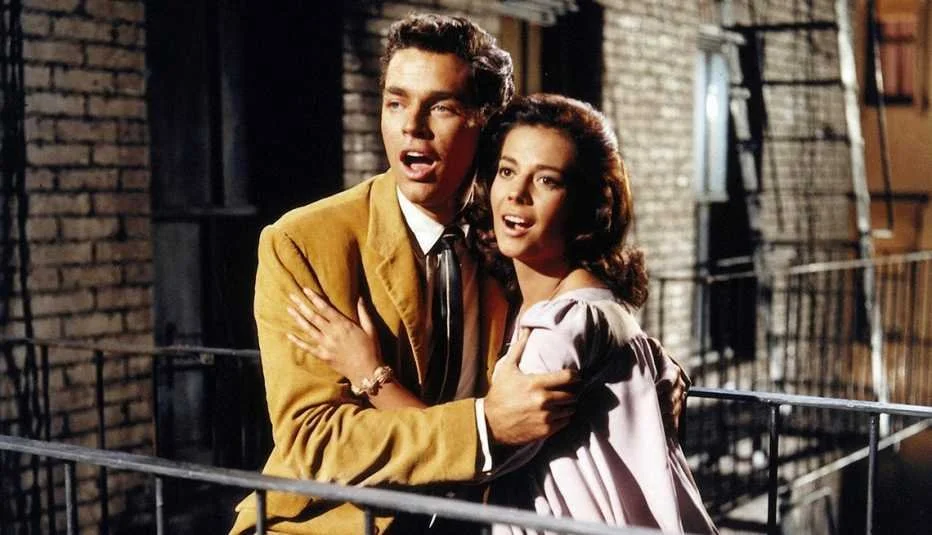
Here we are with 1961’s West Side Story, written by Ernest Lehman and directed by Robert Wise and Jerome Robbins.
Something I pondered in both of these cases is whether or not it’s a cheat. I mean, West Side Story is considered one of the best movies ever. The Lion King is hailed as an essential Disney movie. Even one of the kings of teen movies, 10 Things I Hate About You, also ripped off Shakespeare.
And while I do think it puts these movies in a slightly different category than movies striving for pure originality, I don’t think it really hurts them.
First, it’s an art to take something written centuries ago and map it onto modern culture (well, in The Lion King, our modern jungle culture).
Second, these movies all do original things with that source material, making them their own creations.
Third, these movies don’t try to hide their influences. If they tried to disguise that this was a modern rendition of something that worked in the past, they could claim there’s only x number of stories, so what’s the big deal. The Simpsons have already done everything anyway.
But they lean into what made them, paying homage to Willy, in effect saying, this is what we’re doing.
The Lion King still has a ghost dad.
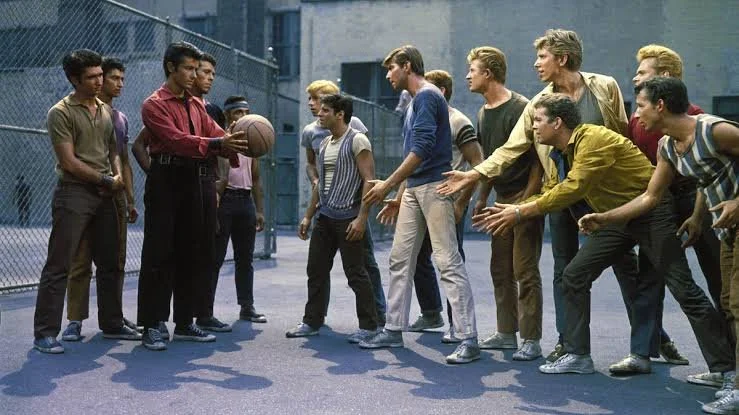
And West Side Story still has many of the same beats, including the Tybalt-kills-Mercutio-and-is-then-killed-by-Romeo beat, perfectly mapped onto Bernardo killing Riff and then being killed by Tony.
It still carries the message that love goes beyond tribalism, with the Capulets and Montagues replaced by the Jets and Sharks.
This makes the original material a constraint, and with constraint can come true creativity.
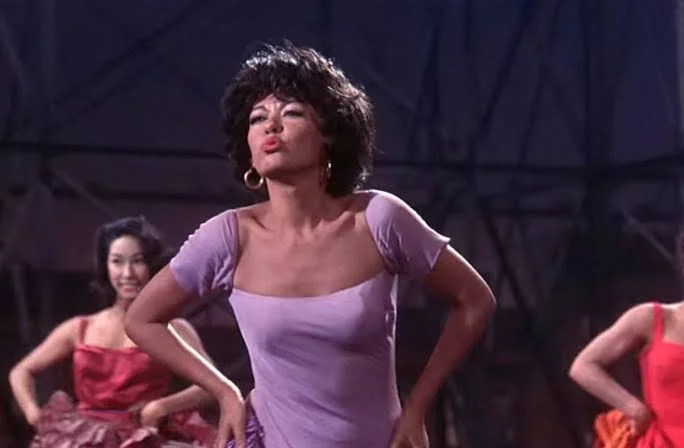
And what it adds is pretty awesome.
Not only the adaptation to modern gang culture, but the songs.
So “America” and “Tonight” set the stage for “Hakuna Matata” and “Can You Feel the Love Tonight,” and they are great songs.
If “Gee, Officer Krupke” wasn’t such a fun song, this could have felt like just a modern reboot instead of a full new thing.
And it manages to subvert it in other ways.
Besides the themes it borrows from Romeo and Juliet, like tribalism and forbidden love, it also goes beyond that and talks about immigration, American values, and problems within our legal system.
And for a while it makes it seem like it might subvert the ending. Are Tony and Maria going to have a happy ending? Are they going to avoid the suicide trap?
No. Tony still dies because he thinks Maria is dead.
But Maria is still alive. Likely messed up for life, but alive.
We’re going to chalk this up to a happy ending.
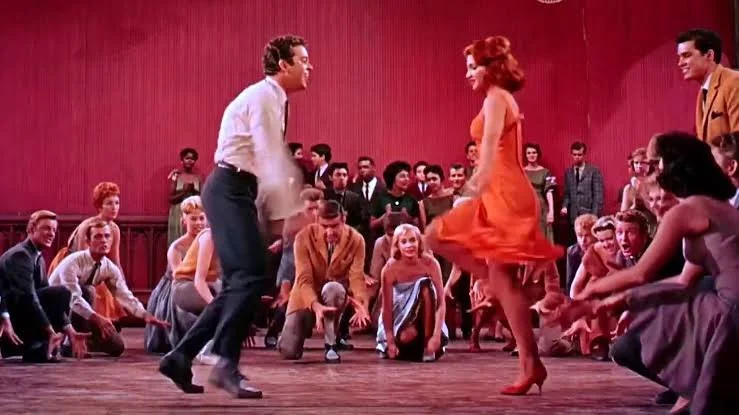
Just like Romeo and Juliet set the stage for West Side Story and Hamlet set the stage for The Lion King, this movie also set the stage for modern reinterpretations to follow.
It takes enough of the story to do it justice and get a new audience interested in it, while also becoming its own phenomenon.
We’re in a time of endless direct reboots, where instead of being based on Hamlet, The Lion King is based on The Lion King.
Most movies are sequels or video game adaptations.
But if we can take anything as a lesson from this, we can still take the bones of what worked and make something completely new.
If we want to get inspiration from the past, eventually we might see Crime and Punishment in a high school, or The Godfather in a tech company, or Mad Men with zoo animals.
Instead of reinvention, we can treat inspiration as a constraint.
With this, we can make derivative art that’s original as Krupke.